

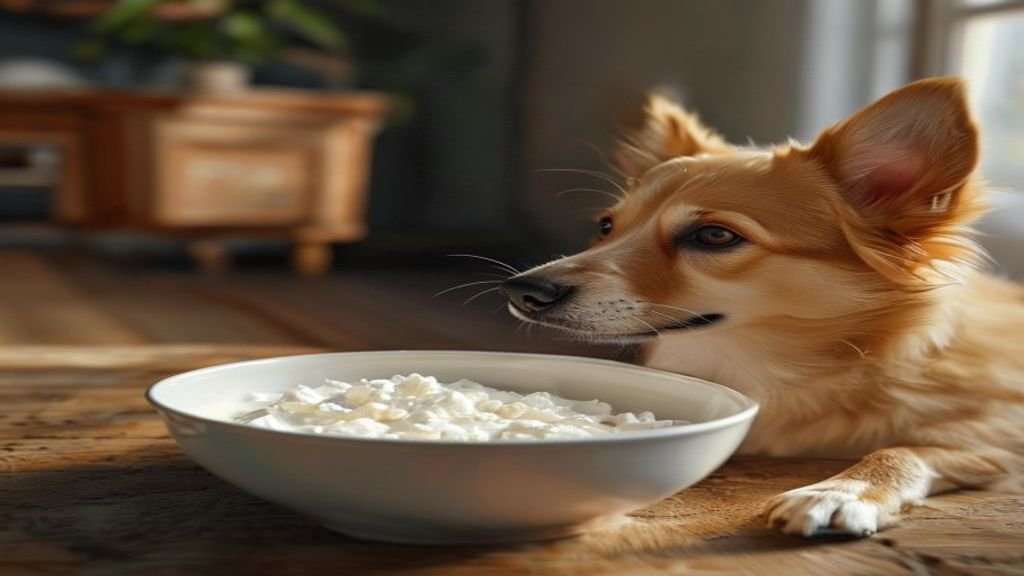

Curd (dahi) is one of the most common Indian kitchen staples people ask about feeding their dog, and the answer is genuinely good news: yes, in moderation, it’s one of the more beneficial “human foods” you can share.
Quick disclaimer: I’m a pet parent and content researcher, not a veterinarian. Every dog’s tolerance is different — introduce curd gradually and watch how your dog responds.
Why curd is actually beneficial, not just “not harmful”
Curd is non-toxic and, per Vetic’s guide for Indian pet parents, brings real nutritional value: calcium and protein for bones and muscles, plus probiotics that can support gut health. Veterinary sources note probiotics may particularly help dogs recovering from a course of antibiotics, stress, a diet change, or mild digestive upset.
Why curd is easier on dogs than plain milk
The fermentation process that turns milk into curd breaks down a portion of the lactose (milk sugar), which is exactly why curd tends to sit better with dogs than a bowl of milk — but “easier to digest” isn’t the same as “zero lactose.” Curd still contains meaningfully less lactose than milk, not none.
Not every dog tolerates it the same way
Dogs vary a lot here — some handle fermented dairy like curd just fine, while others, especially those with a sensitive stomach or genuine lactose intolerance, can get diarrhea, gas, or bloating. The only real way to know is to introduce a small amount and watch.
How much is actually reasonable
| Dog size | Suggested portion | Frequency |
|---|---|---|
| Small dogs (under 10 kg) | About 1 teaspoon of plain curd | A few times a week |
| Medium dogs (10-25 kg) | About 1-2 tablespoons | A few times a week |
| Large dogs | Proportionally more, per your vet’s guidance | A few times a week |
Once or twice a week is a commonly cited safe frequency for dogs that tolerate it well — this isn’t meant to be a daily meal component for most dogs, more a regular but occasional addition.
What to serve, and what to skip
- Plain, unsweetened curd only — no sugar, no flavoured or fruit-mixed varieties, no salt or spices
- Skip curd rice with onion, garlic, or heavy tempering — the curd itself is fine, but common Indian preparations often include ingredients that aren’t dog-safe
- Start with a small amount the first time, regardless of your dog’s size, to see how they react
Frequently asked questions
Can puppies eat curd?
In very small amounts, generally yes, following the same plain-and-unsweetened rule — but check with your vet given how much more sensitive a young digestive system can be.
Is curd better than yogurt for dogs?
Both are fermented dairy with a similar profile — the safety rules (plain, unsweetened, moderate portions) are the same regardless of which one you have on hand.
My dog got diarrhea after curd — does that mean never again?
It suggests that dog doesn’t tolerate it well, at least at that portion — talk to your vet before trying again, and consider that some dogs simply do better without dairy of any kind.
Can curd replace probiotic supplements?
It can be a mild, food-based contributor to gut health, but it isn’t a substitute for a vet-recommended probiotic if your dog has a specific digestive issue that needs targeted treatment.