

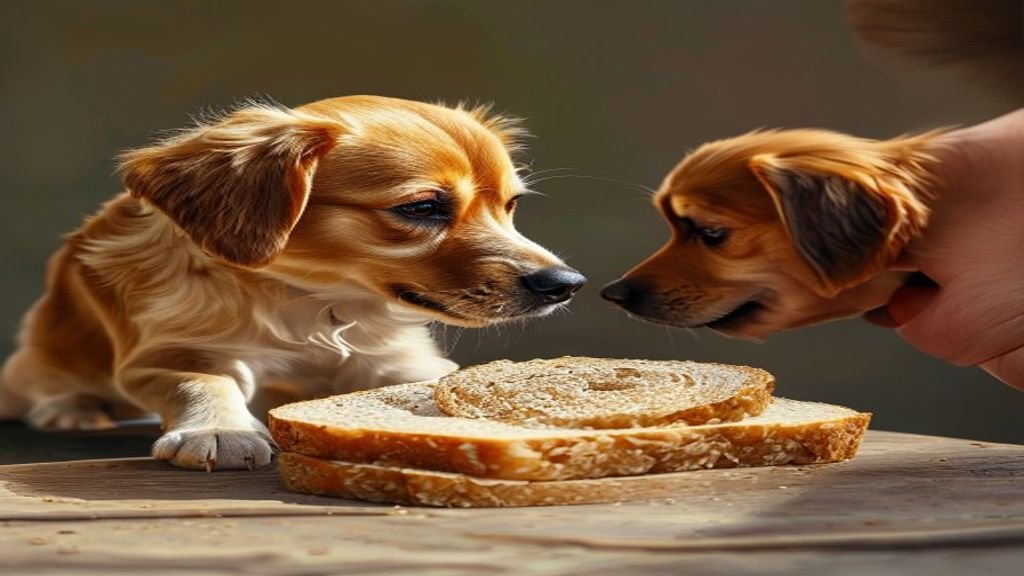

Plain bread is one of the lower-stakes questions in this whole series — it’s not dangerous the way chocolate or grapes are, but it’s also not doing your dog any favours nutritionally. Here’s the honest picture.
Quick disclaimer: I’m a pet parent and content researcher, not a veterinarian. Check with your vet if your dog has a wheat allergy, weight concerns, or diabetes before adding bread as a treat.
Plain bread: generally safe, in small amounts
Plain white or wheat bread, without allergy concerns, is generally safe for dogs in moderation and typically doesn’t cause stomach upset, per the American Kennel Club. But it’s worth being honest about what it actually offers: bread is essentially a filler food, contributing calories without meaningful nutrients your dog isn’t already getting from a balanced diet.
How much is reasonable
Guidance varies a bit by source, but the common thread is: small and occasional, not a daily habit — think a couple of bites a few times a month, or at most a small piece once a week, rather than a regular addition to meals.
The one you must never give: raw bread dough
This is the genuinely dangerous version, and it’s worth memorizing separately from the “plain bread is mostly fine” message above. Per the Merck Veterinary Manual‘s food hazard listings, raw bread dough is dangerous for two separate reasons if a dog eats it: the yeast keeps working in the warm environment of the stomach, causing the dough to expand and distend the stomach (itself a real emergency risk), while also producing ethanol as a byproduct, leading to genuine alcohol toxicity. If your dog eats raw dough, that’s an emergency vet call, not a “let’s watch” situation.
Watch what’s baked into the bread
Plain bread is one thing — bread as an ingredient in a baked good is a different question entirely, because of what’s commonly mixed in:
- Raisins (in raisin bread, fruit loaves) — highly toxic to dogs, arguably the biggest hidden risk in this whole category
- Chocolate (chocolate babka, chocolate chip loaves) — toxic, as covered in our chocolate toxicity guide
- Garlic and onion (garlic bread, savoury loaves) — toxic to dogs
- Xylitol — an artificial sweetener sometimes used in “healthier” baked goods, toxic to dogs even in small amounts
- Macadamia nuts, nutmeg — both toxic, occasionally found in specialty breads
The safe rule of thumb: plain bread only, and actually check the ingredient list before sharing anything from a bakery or a recipe with mix-ins.
Frequently asked questions
Is one type of bread better than another — white vs wheat vs multigrain?
Plain versions of any of these are similarly fine in moderation; the concern is almost always about what’s mixed in, not the base bread type, unless your dog has a specific grain allergy.
What if my dog has a wheat or gluten sensitivity?
Skip bread entirely and talk to your vet about appropriate treat alternatives — sensitivities vary dog to dog and are worth taking seriously if you already suspect one.
My dog ate a slice of garlic bread — how worried should I be?
Contact your vet — garlic (and onion) toxicity depends on quantity and your dog’s size, but it’s a real risk worth a professional assessment rather than guessing.
Can puppies have plain bread?
Small amounts are generally fine occasionally, but there’s little reason to make it a habit — a puppy’s calories are better spent on balanced puppy food and appropriate treats.