

This blog’s been reviewed by Dr. Meera Iyer, BVSc & AH, MVSc, a professional veterinarian and Veterinary Wellness Advisor at Pawscuit — Small Animal Practice (Bombay Veterinary College).
With 5+ years of clinical experience in advising pet parents on budgeting for vaccines, sterilisation, nutrition, and emergencies, Dr. Meera has reviewed this Indian (Desi) Cat price guide so that the medical and cost information stays accurate and realistic for Indian families.
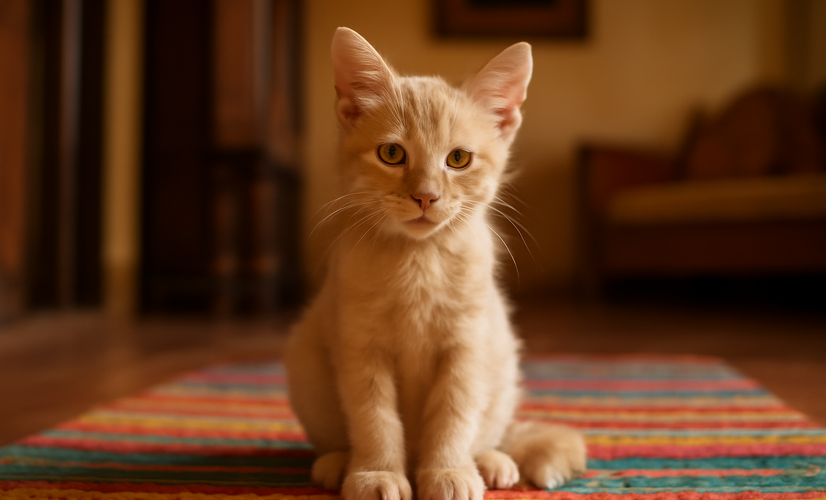
Every breed guide on this site eventually gets a version of the same comment: why does a cat need to be a specific breed at all? It is a fair question, and it deserves its own honest answer rather than a footnote. Here is what an Indian, or desi, cat actually costs, and why it is worth serious consideration alongside any pedigreed breed you are comparing it to.
The short answer: how much does a desi cat cost in India?
Taking in a desi kitten directly, from a community, a friend’s litter, or a street rescue, is often free to ₹500. Going through a shelter or rescue group typically involves an adoption fee of ₹500 to ₹2,000. Either way, budget ₹1,500 to ₹3,500 for an initial vet visit covering vaccination, deworming, and a general health check if this has not already been done.
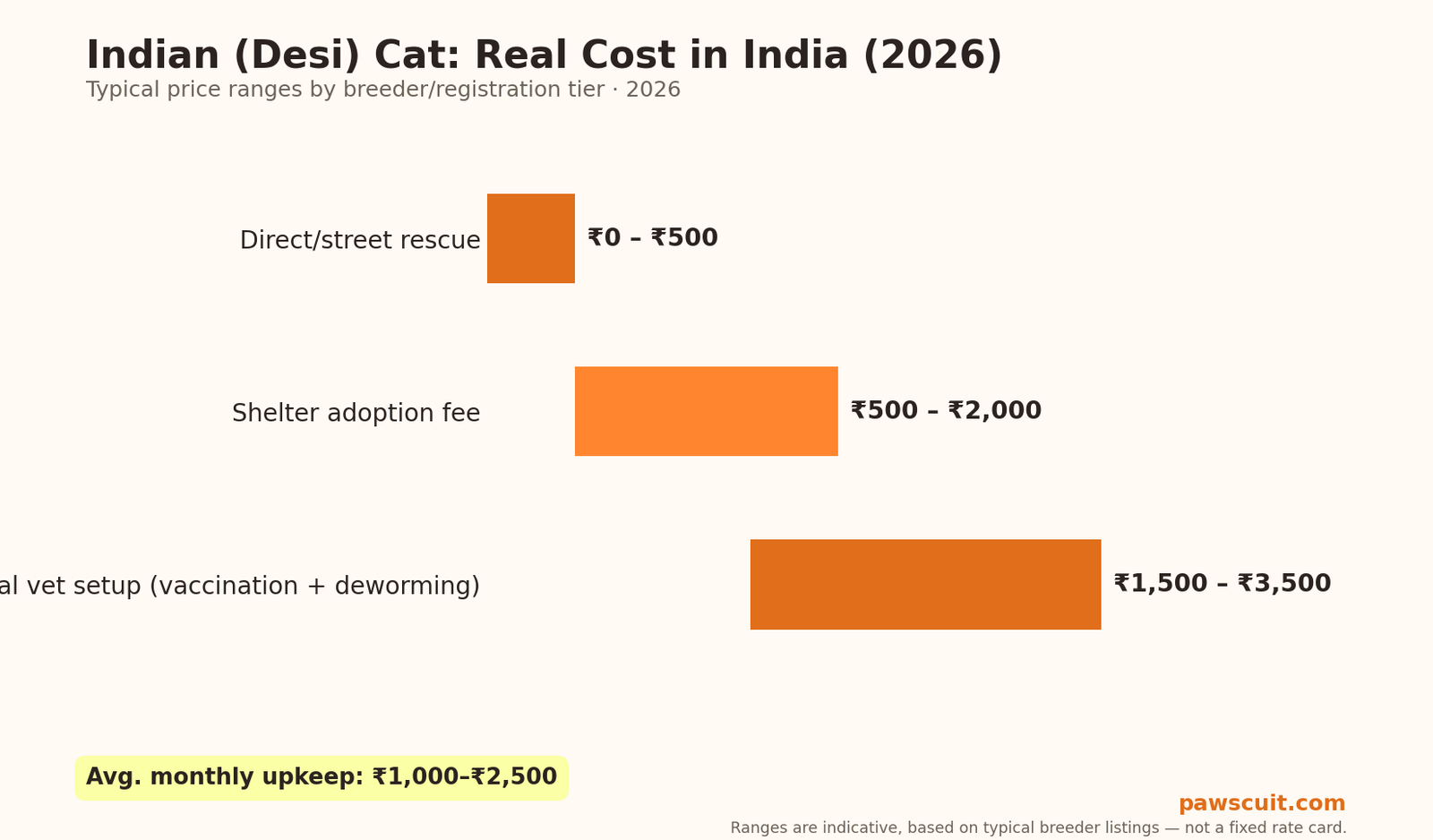
That initial vet setup cost is the real number to plan for, not the adoption fee itself.
Why desi cats are, on average, the healthier choice
This is worth saying plainly, not as a consolation prize for not buying a pedigreed breed: desi cats generally have fewer inherited health problems than heavily selectively-bred lines. A desi cat’s gene pool is wide and naturally diverse, which means the specific issues covered across our other breed guides, flat-faced Persians struggling to breathe, Scottish Folds developing joint disease from the same gene that folds their ears, are largely absent here. Desi cats are also already adapted to Indian heat, unlike several popular imported breeds that genuinely struggle with it.
None of this means desi cats are risk-free or that pedigreed cats are a bad choice. It means the health argument, one of the biggest reasons people cite for wanting a ‘purebred’ cat, actually points the other way more often than people expect.
What the adoption process actually looks like
Most shelters and rescue groups will have already started vaccinations and deworming by the time a kitten is ready for adoption, and a responsible one will give you the records. If you are taking in a kitten directly from the street or a community litter without that head start, plan for a full vet visit soon after, covering the same core vaccination schedule every kitten needs starting around 6 to 8 weeks old, plus a general health screen since street kittens have not had the same monitoring.
| Monthly expense | Approximate cost (₹) |
|---|---|
| Food | 600 – 1,500 |
| Litter | 300 – 700 |
| Vet checkups, preventives | 300 – 1,000 (averaged) |
This is, across the board, the lowest ongoing-cost option among everything we cover, alongside being one of the healthiest.
A few questions worth settling first
Is a desi cat the same as a stray cat?
Not necessarily — desi refers to India’s native, non-pedigreed cat population broadly, whether street-born or already owned.
Why do vets recommend desi cats for first-time owners?
Their diverse gene pool avoids many breed-specific inherited issues, and they are naturally adapted to Indian conditions.
What vaccinations does a desi kitten need?
The same core schedule as any kitten, starting around 6 to 8 weeks.
Can I just take in a street kitten myself instead of going through a shelter?
Yes, but budget for a full vet checkup soon after, since it has not had the same prior monitoring.
If you are weighing this against a specific pedigreed breed, our cat price overview compares the full range.
I’m not a veterinarian — I’m a pet parent and content researcher. Everything above is meant to help you make an informed, honest comparison, not replace a vet’s guidance. A desi cat deserves the same thoughtful vet care as any other — the lower cost is not a reason to skip it.