

This blog’s been reviewed by Dr. Meera Iyer, BVSc & AH, MVSc, a professional veterinarian and Veterinary Wellness Advisor at Pawscuit — Small Animal Practice (Bombay Veterinary College).
With 5+ years of clinical experience in advising pet parents on budgeting for vaccines, sterilisation, nutrition, and emergencies, Dr. Meera has reviewed this German Shepherd price guide so that the medical and cost information stays accurate and realistic for Indian families.
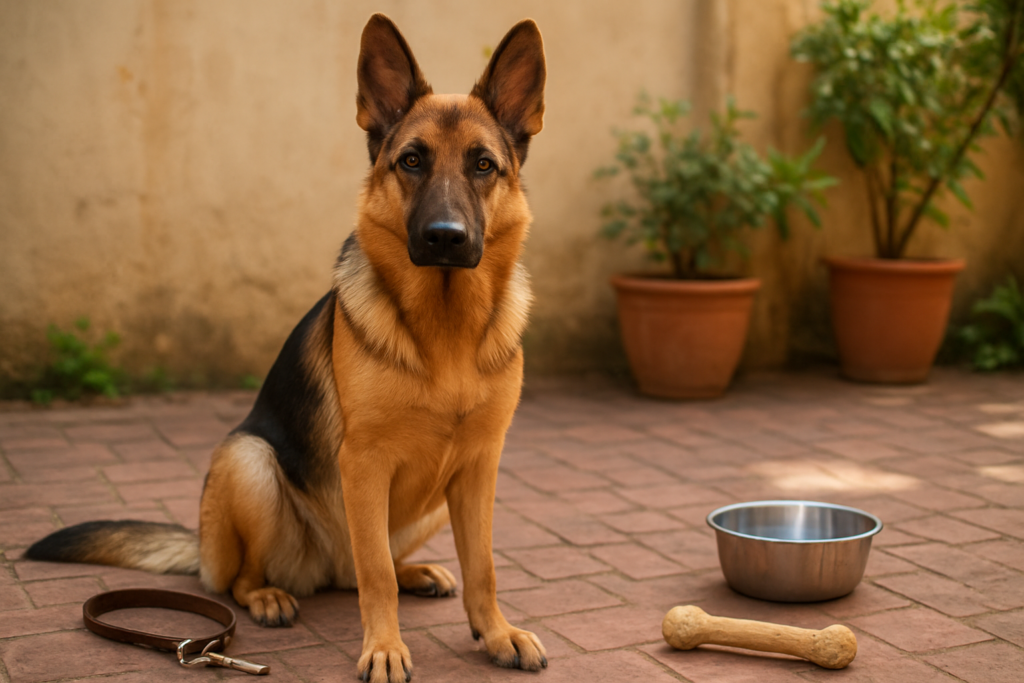
German Shepherds are, by a wide margin, one of the most searched dog breeds for home security in India, and the price range reflects that popularity. But ‘german shepherd price in india’ hides a bigger question most buyers do not think to ask: are you looking at a show-line dog or a working-line dog, because they are built, and priced, very differently.
The short answer: how much does a German Shepherd cost in India?
A pet-quality German Shepherd puppy without papers typically costs ₹8,000 to ₹20,000. KCI-registered puppies from a breeder with proper documentation run ₹20,000 to ₹45,000. Working-line or imported dogs, including protection-trained lines, can reach ₹45,000 to ₹1,50,000+.
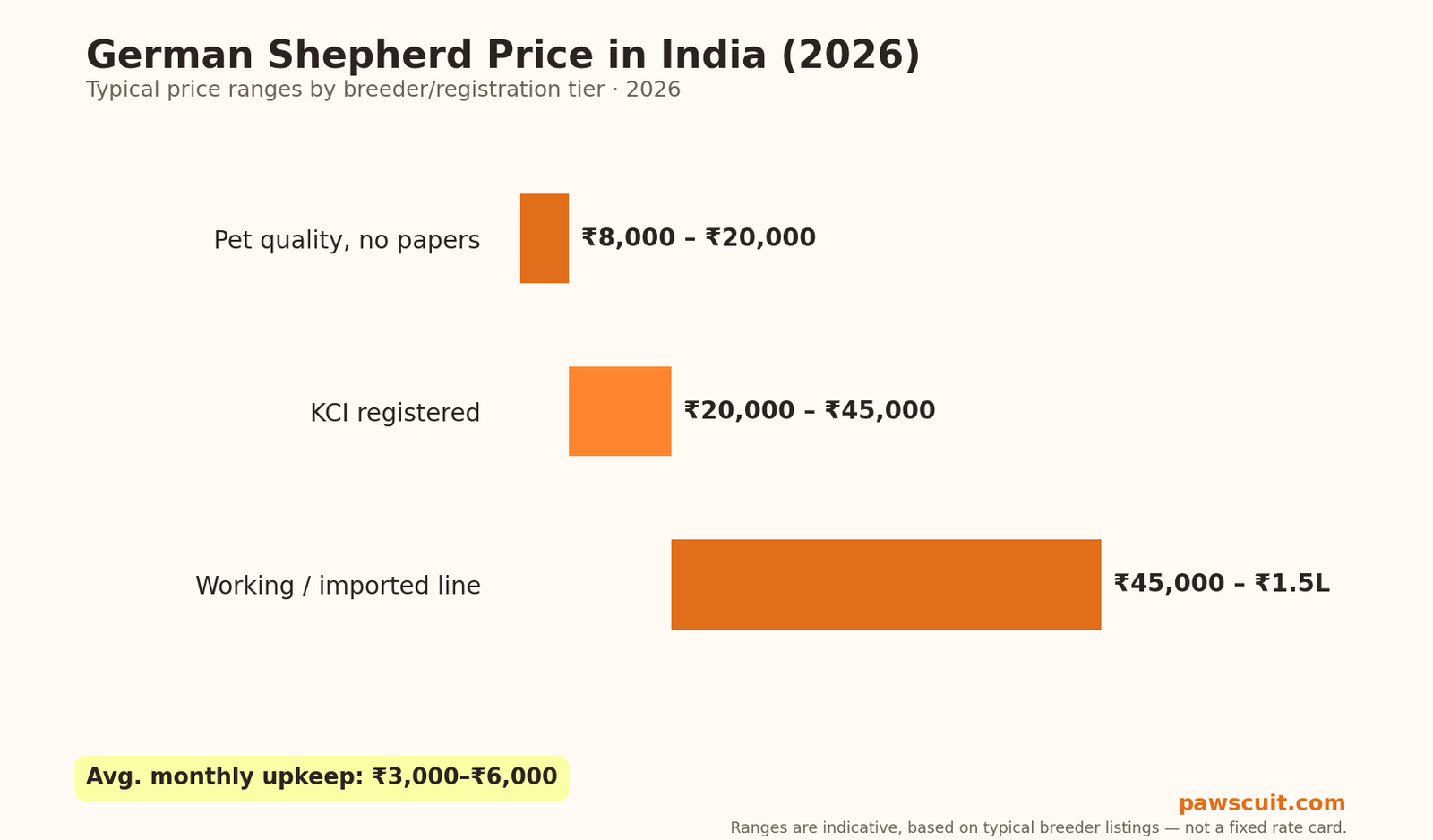
The gap between the lowest and highest tier here is bigger than most breeds on this list, mostly because of the working-line premium.
Show-line vs. working-line: why it matters more than the price tag
Show-line German Shepherds are bred toward a physical standard, which in recent decades has produced the sloped, angled back you see in a lot of Indian breeder listings. Working-line Shepherds, bred for police, military, and protection work, have a straighter back, higher drive, and generally need far more structured exercise and mental work to stay balanced.
A lot of buyers pick based on looks alone and end up with a working-line dog’s energy level in a home that was set up for a calmer companion, or the opposite. Ask the breeder directly which line the parents come from, and be honest with yourself about how much daily exercise and training you can actually commit to.
What actually moves the price
Line. Working and protection lines cost meaningfully more than standard pet-quality show lines.
Hip and elbow scoring. Breeders who test parents before breeding, and can show you the results, charge more, and it is worth paying for given how common hip dysplasia is in this breed.
Coat type. Long-coat German Shepherds, a recessive trait, are less common and often priced as a premium variant, even though they are not a separate breed.
City. Delhi NCR and Mumbai breeders generally charge more than smaller cities.
The health cost worth planning for
Hip and elbow dysplasia are the defining health concern in this breed, and it is a well-documented predisposition rather than a rare complication. Degenerative myelopathy, a progressive spinal cord condition, is also more common in German Shepherds than in most breeds. Neither is guaranteed, but both are reasons to ask about the parents’ health history and to budget for joint support as your dog ages rather than only reacting once symptoms appear.
| Monthly expense | Approximate cost (₹) |
|---|---|
| Food (large, active breed) | 2,500 – 4,500 |
| Grooming (moderate to heavy shedding) | 500 – 1,200 |
| Vet checkups, preventives | 700 – 2,000 (averaged) |
| Joint supplements (recommended as they age) | 500 – 1,500 |
Given how common joint problems are in this breed, it is worth reading up on pet insurance options in India while your Shepherd is still a healthy puppy.
Buying vs. adopting
German Shepherds and Shepherd-mixes are commonly available through Indian shelters and rescue groups, often already trained to some degree. Adoption fees typically run ₹0-₹5,000, and it is a realistic route to a calmer, already-socialized adult dog rather than gambling on a puppy’s eventual temperament.
A few questions worth settling first
What is the difference between show-line and working-line German Shepherds?
Show-line dogs are bred to a conformation standard with a sloped back; working-line dogs are bred for police, military, or protection work, with a straighter back and higher drive.
Why do German Shepherds get hip dysplasia so often?
It is a well-documented breed predisposition, worsened by breeding for an exaggerated sloped topline in some lines. Ask breeders about hip scoring.
Are German Shepherds good guard dogs for Indian homes?
Generally yes, but only with consistent training and socialization — an untrained Shepherd is not automatically a reliable guard dog.
Is KCI registration worth it for a German Shepherd?
Yes, generally, since it usually comes with better documentation of the parents’ health and temperament.
If you are comparing guard-dog breeds, our Rottweiler types guide covers a similarly popular alternative.
I’m not a veterinarian — I’m a pet parent and content researcher. Everything above is meant to help you ask better questions, not replace a vet’s or a reputable breeder’s judgment. If a listing’s claims about lineage or health testing feel thin, that’s worth pressing on before you pay anything.