

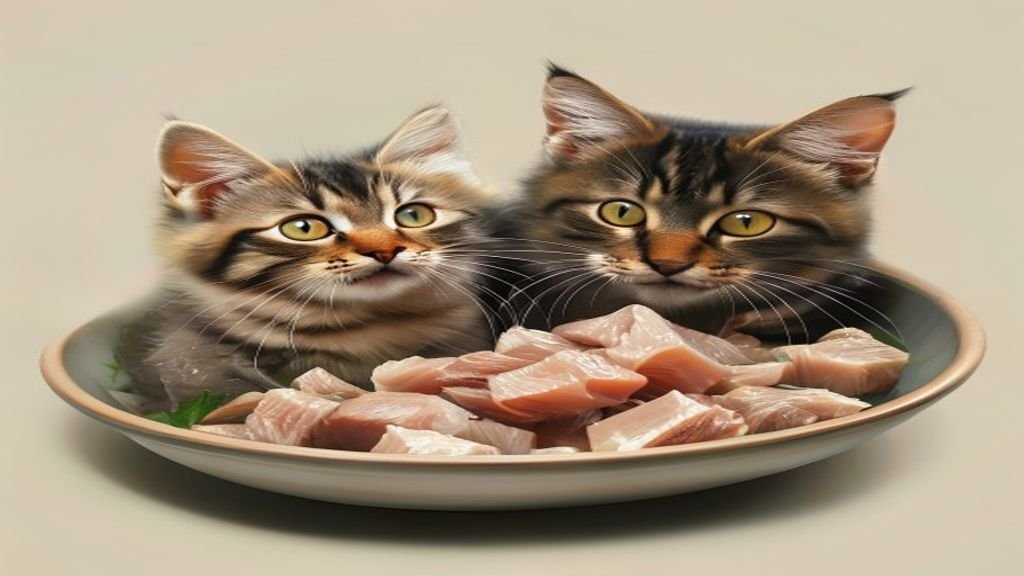

Cats and tuna feels like the most obvious pairing in the world — cartoon cats practically live on it — which is exactly why the real answer surprises people: yes, but far less than your cat would like, and not as a habit.
Quick disclaimer: I’m a pet parent and content researcher, not a veterinarian. Check with your vet before making tuna a regular part of your cat’s diet.
The two real risks: mercury and “tuna addiction”
Per Tufts University and PetMD, there are two separate concerns, and both matter:
1. Mercury
A cat eating tuna regularly ingests far more mercury on a body-weight basis than a person would from the same fish, given how much smaller cats are. Mercury build-up can harm the kidneys and increase the risk of kidney failure, and can also cause neurological symptoms — loss of coordination, tremors, muscle weakness — along with vomiting, diarrhea, and behavioral changes like appetite loss or agitation in more serious cases.
2. “Tuna addiction” (tuna fish syndrome)
This is a genuinely recognized phenomenon in veterinary medicine: cats can become so fixated on tuna’s taste that they refuse or significantly reduce eating their regular, nutritionally complete food. That’s not just a fussy-eater inconvenience — prolonged reduced eating in cats can lead to hepatic lipidosis (fatty liver disease), which can be fatal. This is exactly why vets are cautious about tuna becoming a habit rather than an occasional treat.
How much and how often
- A small amount, once a week at most, is the commonly cited safe guideline
- Keep treats, tuna included, under about 10% of your cat’s overall diet
- If you do give tuna, canned chunk-light tuna is preferred over albacore — albacore comes from a larger tuna species with roughly three times the mercury level
- Rotate protein sources rather than making tuna a fixture
When tuna is actually useful
Some vets recommend a small amount of tuna (or its juice/flavour) specifically to encourage a cat that’s reluctant to eat when it genuinely needs to — this is a targeted, occasional use, not a reason to make tuna part of the regular rotation.
Frequently asked questions
Is tuna packed in oil worse than tuna in water?
Water-packed, plain tuna (no added salt, seasoning, or oil) is the better choice — oil adds unnecessary fat, and flavoured or seasoned varieties can include ingredients not meant for cats.
Can kittens have tuna?
Better to avoid it or keep it extremely minimal — kittens have higher nutritional needs that a nutritionally incomplete treat like tuna doesn’t meet, and the “tuna addiction” risk is just as relevant for a young cat forming eating habits.
My cat only wants tuna and won’t eat regular food — what do I do?
This is worth a vet visit rather than continuing to give in — persistent appetite loss for regular food, especially combined with a tuna fixation, is exactly the pattern associated with the fatty liver risk mentioned above.
Is cat food that lists “tuna” as an ingredient the same concern?
No — commercial cat foods with tuna as a labeled ingredient are formulated to be nutritionally complete and balanced, which is a very different situation from feeding plain tuna as a standalone treat.