

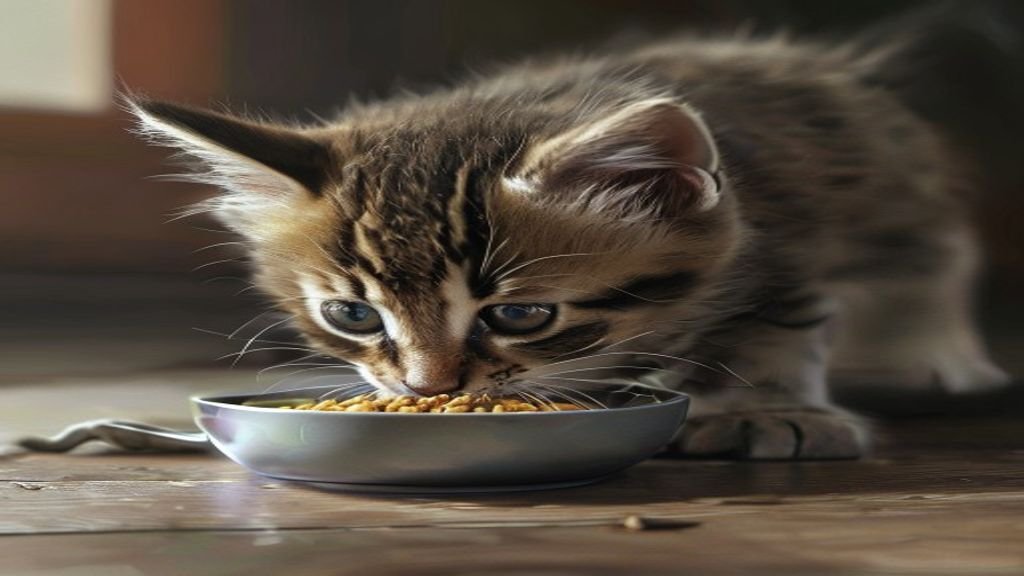

Kitten feeding confuses new cat parents mostly because the “right” schedule genuinely changes every few weeks in the first year — what’s correct at 6 weeks is wrong by 4 months. Here’s the actual timeline, not just a single generic answer.
Quick disclaimer: I’m a pet parent and content researcher, not a veterinarian. Individual needs vary — check with your vet for a kitten with a specific health condition or growth concern.
The full age-by-age schedule
| Age | Meals per day | Notes |
|---|---|---|
| 3-4 weeks | Weaning begins | Kittens start on wet food or moistened kitten formula as they wean off mother’s milk; teeth are just emerging |
| 5-6 weeks | Transitioning | Can start exploring moistened dry kibble alongside wet food |
| 6-12 weeks | 4 small meals/day | Frequent small meals suit their tiny stomachs and high growth needs |
| 3-6 months | 3 meals/day | Meal frequency starts to reduce as the kitten grows |
| 6 months – 1 year | 2-3 meals/day | Approaching adult feeding patterns |
| 8 weeks+ | — | Most kittens can manage dry food without moistening by this point |
This lines up with guidance from Purina and PetMD — exact week-to-week timing can vary a little by kitten and by your vet’s specific recommendation.
Wet food, dry food, or both?
All three approaches can work. Many vets actually recommend a combination, since it pairs the hydration benefit of wet food with the convenience of dry — if you do mix both, make sure the combined daily calories from wet and dry together match your kitten’s actual target, rather than feeding a full portion of each.
Why frequent small meals matter early on
Young kittens have small stomachs and high energy needs relative to their size — four small meals a day at 6-12 weeks isn’t excessive, it’s matched to how much growing they’re doing and how little they can eat in one sitting.
Signs you might need to adjust
- A kitten that seems constantly hungry between meals, or one that’s leaving food consistently — either is worth mentioning to your vet rather than just guessing at a fix
- Noticeable weight changes that seem off track for their age
- Any digestive upset after a food or schedule change — introduce changes gradually
Frequently asked questions
When should I switch my kitten from kitten food to adult cat food?
Most kittens transition around 12 months, though large breeds may need kitten food a bit longer — this is a good one to confirm with your vet based on your specific kitten’s growth.
Is free-feeding (food available all day) okay for kittens?
Scheduled meals are generally easier to monitor for appetite and portion control, especially early on — talk to your vet if you’re considering free-feeding, since it can make it harder to notice if something’s off.
My kitten seems to want to eat more than the chart suggests — is that normal?
Growing kittens do need meaningfully more calories per kilogram than adult cats, but consistently wanting more than a reasonable portion is worth mentioning to your vet rather than just increasing food indefinitely.
Can I feed my kitten the same schedule as my adult cat?
Not until they’ve reached roughly the 6-12 month mark and are transitioning toward adult feeding patterns — younger kittens genuinely need more frequent meals.