

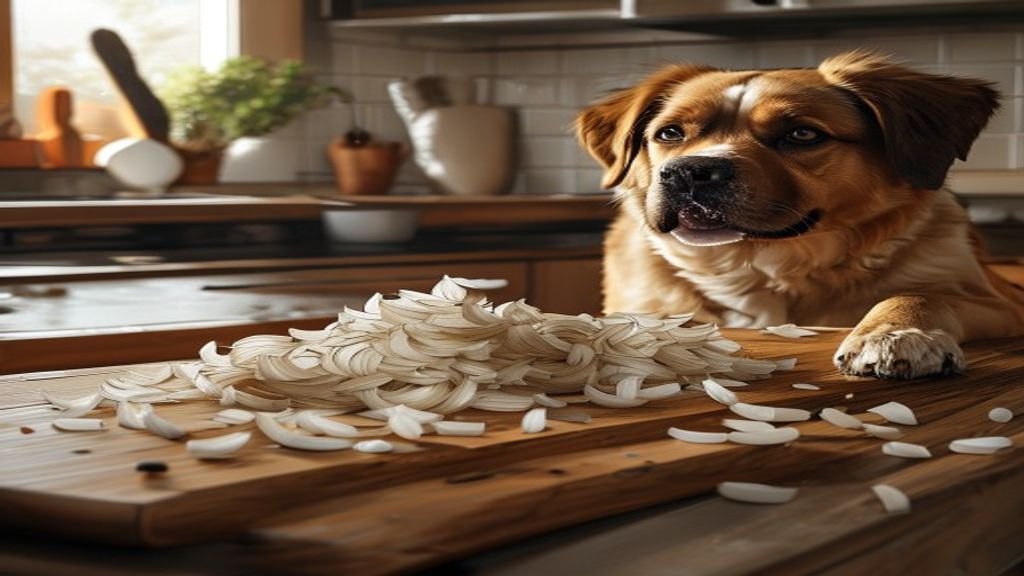

No — dogs cannot eat onions, and this one deserves extra attention because onion sneaks into so much everyday cooking without a second thought. If you cook Indian food at home, this is one of the most important “keep it away from the dog” rules on this whole site.
Quick disclaimer: I’m a pet parent and content researcher, not a veterinarian. If your dog has eaten onion, garlic, or leeks in any meaningful amount, contact your vet — don’t wait for symptoms to confirm it.
Why onions are genuinely toxic, not just “not ideal”
Onions belong to the allium family (along with garlic and leeks), and per the Merck Veterinary Manual and PDSA, all parts of the plant are toxic to dogs — raw, cooked, or dried, it doesn’t matter. The toxic compounds (thiosulfates and related disulphides) damage red blood cells, which can lead to a type of anemia.
Garlic is even more concentrated
Worth knowing: garlic is roughly five times more toxic than onion, ounce for ounce — so a dish seasoned heavily with garlic is a bigger concern per gram than the same amount of onion.
Symptoms — and why the delay is dangerous
Symptoms include vomiting, diarrhea, and reduced appetite, but the tricky part is timing: clinical signs typically develop within 24 hours, but can be delayed for up to 7 days after ingestion. This delay is exactly why “my dog ate some onion gravy last night and seems fine this morning” isn’t reassuring — the reaction can still be building.
Emergency signs — red or brown-tinged urine, weakness, or fast/laboured breathing — mean get to a vet immediately, not “let’s keep watching.”
Where onion and garlic hide in everyday cooking
- Most Indian gravies, dals, and curries — a base of onion and garlic is standard in a huge share of home cooking
- Soups, stocks, and bouillon
- Baby food and some processed foods (onion/garlic powder counts too — concentrated forms are still toxic)
- Bread and baked goods with savoury seasoning
This is exactly why “just a little bit of our dinner” is a genuinely risky habit for a dog in most Indian households — the base of the dish is often the problem, not just one obvious ingredient.
What to do if your dog eats onion or garlic
- Contact your vet immediately, and mention roughly how much and how recently
- If you’re within about 4 hours of ingestion, a vet may induce vomiting or use other methods to remove as much as possible from the digestive system — this window matters, so don’t delay the call
- Don’t try to induce vomiting yourself without vet guidance
Frequently asked questions
Is a small amount of onion powder in a recipe really a problem?
Yes — onion and garlic powder are concentrated forms of the same toxic compounds, so a small amount of powder can be more potent than an equivalent amount of the fresh vegetable.
My dog ate a bite of curry with onion in it — how worried should I be?
Call your vet to discuss the amount and your dog’s size — don’t assume it’s fine just because symptoms haven’t shown up yet, given how delayed the reaction can be.
Are green onions or spring onions safer than regular onions?
No — they’re part of the same allium family and carry the same toxicity risk.
Can small amounts over time build up to a problem, even if one meal seems fine?
Yes — repeated small exposures can have a cumulative effect, so “a little bit regularly” isn’t a safe long-term habit even if no single incident causes obvious symptoms.