

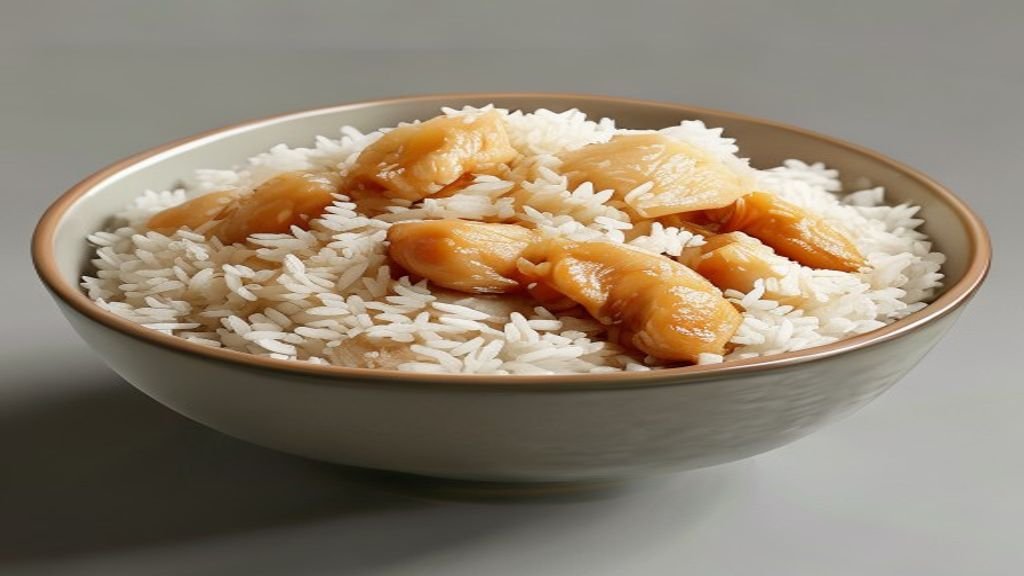

Rice for dogs is a two-part answer: yes, as an occasional addition, and yes, it’s genuinely useful during a stomach upset — but it’s not a food you should let take over a meaningful share of your dog’s daily diet.
Quick disclaimer: I’m a pet parent and content researcher, not a veterinarian. If your dog has ongoing digestive issues, a bland diet is a short-term measure, not a substitute for a vet visit.
Plain, cooked rice: safe, in moderation
Per PetMD, dogs can eat plain, cooked rice, and it’s often recommended by vets specifically to help with mild digestive upset. Rice shouldn’t exceed about 10% of your dog’s daily calories — many owners find it simpler to offer it 2-3 times a week rather than daily, just to avoid overdoing it without meaning to.
White versus brown rice
For an upset stomach specifically, vets commonly recommend white rice over brown — it’s easier to digest, which is exactly what you want when a dog’s stomach is already unsettled. Brown rice has more fiber and a lower glycemic index, and is fine as a general addition for a healthy dog, but it’s harder to digest and generally not what’s recommended as a remedy for diarrhea specifically.
The bland diet: rice’s actual job
If your dog has mild diarrhea, has vomited once or twice, or seems to have a temporary stomach upset, a short-term bland diet of plain white rice and a lean, plain protein (like boiled chicken with no skin, bone, or seasoning) is a commonly recommended approach — typically mixed at roughly 2 parts rice to 1 part protein by volume, fed in small, frequent meals rather than one or two big ones.
This is a short-term measure — if symptoms continue beyond a day or two, or worsen, that’s a vet visit, not a reason to keep the bland diet going indefinitely.
Why rice shouldn’t become a regular meal replacement
Rice lacks the complete vitamins, minerals, and protein a dog needs from a properly formulated diet — it’s a useful supplement or occasional addition, not something to lean on as a significant daily food source on its own.
Practical portions for a healthy dog
| Dog size | Approximate treat portion |
|---|---|
| Extra-small | 1-2 tablespoons |
| Small | 2-3 tablespoons |
| Medium | About 1/4 cup |
| Large | About 1/3 cup |
| Extra-large | Up to 1/2 cup |
Frequently asked questions
Can dogs eat rice every single day?
In small, appropriate portions within that 10% treat guideline, yes — but it shouldn’t be replacing meaningful parts of a balanced diet on a daily basis.
How long should a bland rice-and-chicken diet last?
Typically just a few days, until symptoms resolve — if they don’t improve within a day or two, or get worse, see your vet rather than extending the bland diet further on your own.
Is fried rice or seasoned rice okay?
No — stick to plain, cooked rice with nothing added. Oil, salt, onion, garlic, and other common seasonings in fried or flavoured rice dishes aren’t appropriate for dogs.
Can puppies have rice?
Small amounts occasionally are fine, following the same plain-and-cooked rule — puppies have higher nutritional needs for growth, so rice shouldn’t crowd out their regular puppy food.